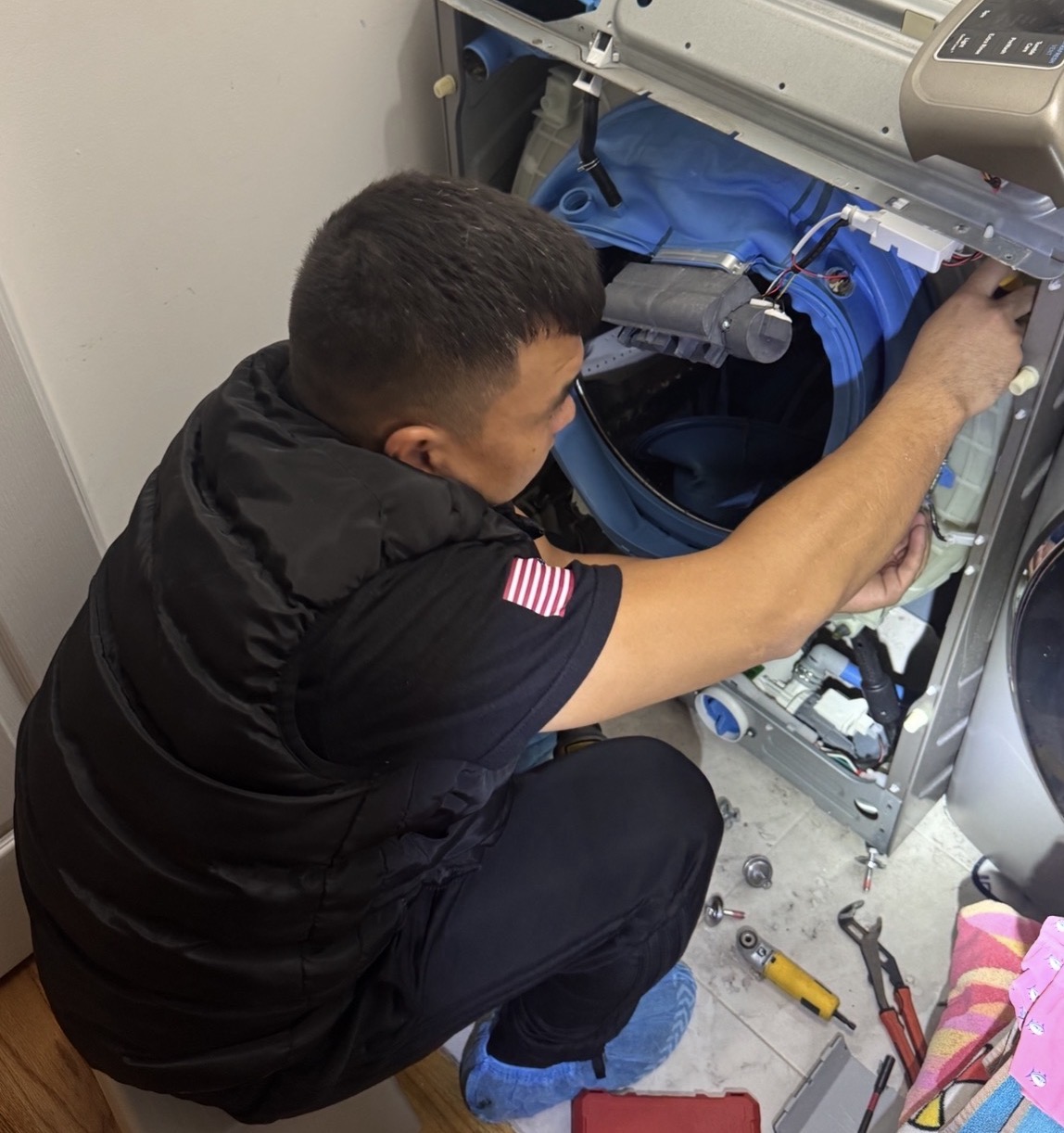
Front-load and top-load — Ld drain errors, door gasket leaks, control board faults, door lock failures, inlet valve, and no-code diagnosis. Every repair personally handled by Badma.
$80 service call · Applied toward repair · 90-day warranty
GET A CALLBACK
Describe the issue — Badma will call with a price and confirm same-day availability in 10308.
GE Washers on Staten Island
Staten Island's housing stock runs from 1950s colonials on the South Shore to mid-2000s townhouses in New Springville and pre-war row buildings on the North Shore. GE washers sit in all of them — and the fault patterns that develop depend partly on the machine's age, partly on how the home is built, and partly on how often the machine runs. Across all 10 ZIPs that Premier Appliance Repair Staten Island covers, three repair types account for the majority of GE washer calls.
The Ld or F9E1 error is the most common GE washer call across Staten Island — it shows up in every ZIP, in every housing type, in both front-load and top-load machines. On GE front-loaders, the cause is usually one of two things: a clogged debris filter or a failed drain pump. The debris filter — located behind a small access panel at the bottom-front of the machine on the GFW series — collects lint, coins, hair ties, and fabric scraps. In a household running five or six loads a week, this filter can reach capacity in under two years. When it does, it restricts flow to the pump's intake enough to trigger Ld without any pump failure at all.
The filter and pump are checked in sequence on every Ld call — filter cleared first, machine retested, pump assessed under load only if Ld continues. On GE top-loaders like the GTW685BSLWS, the drain pump sits differently and there is no debris filter in the same position — a foreign object lodged in the impeller is the more common cause, and it often produces a drain failure without any error code on the panel at all.
Ld is the most common GE washer call across Staten Island — and the most frequently resolved in a single visit. Filter first, pump under load second, both addressed the same appointment.
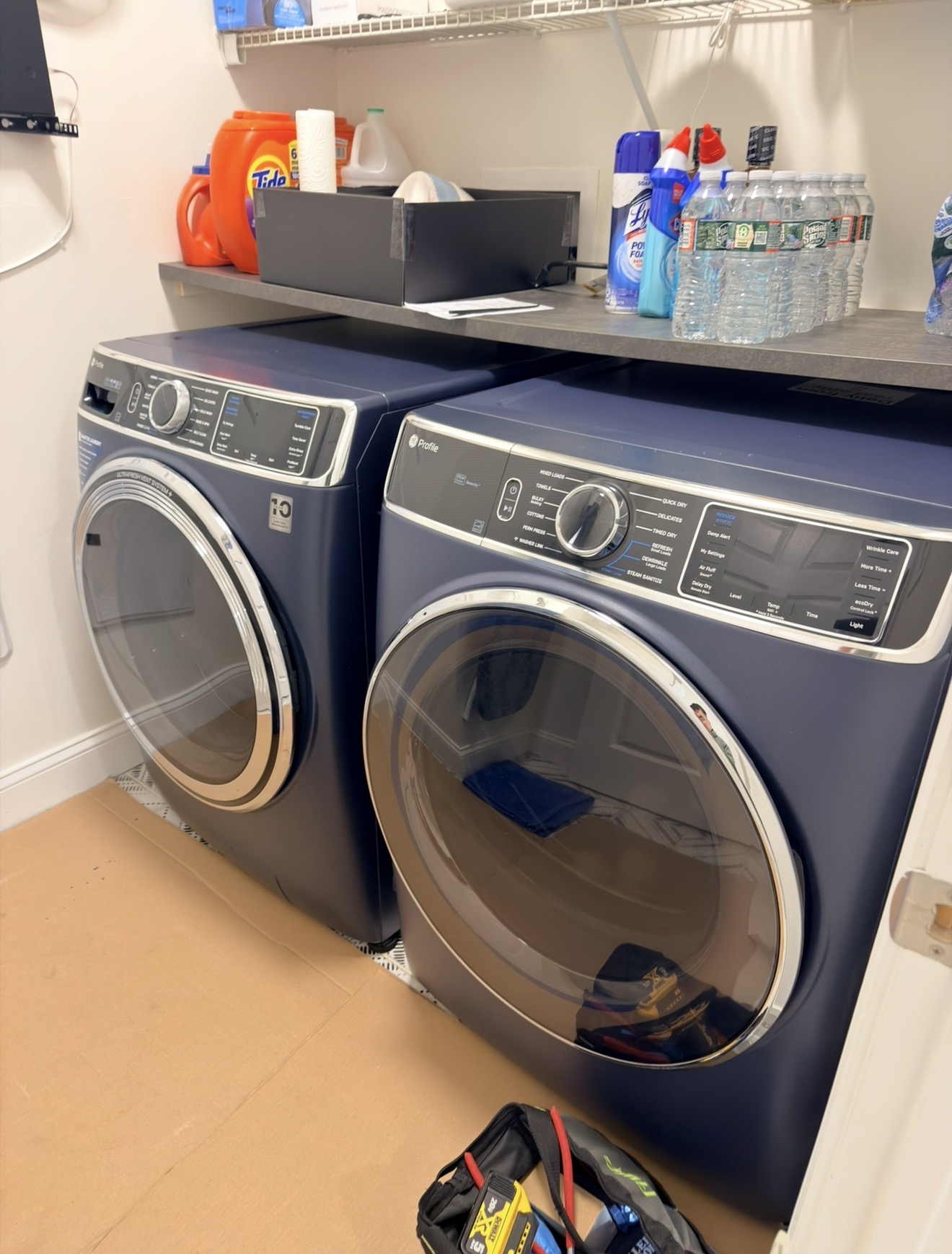
GE Profile front-loaders — including the PFW870SPVRS, GFW850SPNRS, and related UltraFresh Vent models — were purchased in significant numbers across Staten Island between 2019 and 2022. These machines are now hitting the 3–6 year mark, which is when board-level faults start appearing consistently. The F2E1 code (keypad or UI board communication failure) and F6E3 (control board to sub-board communication error) are the codes that come in from these models most often.
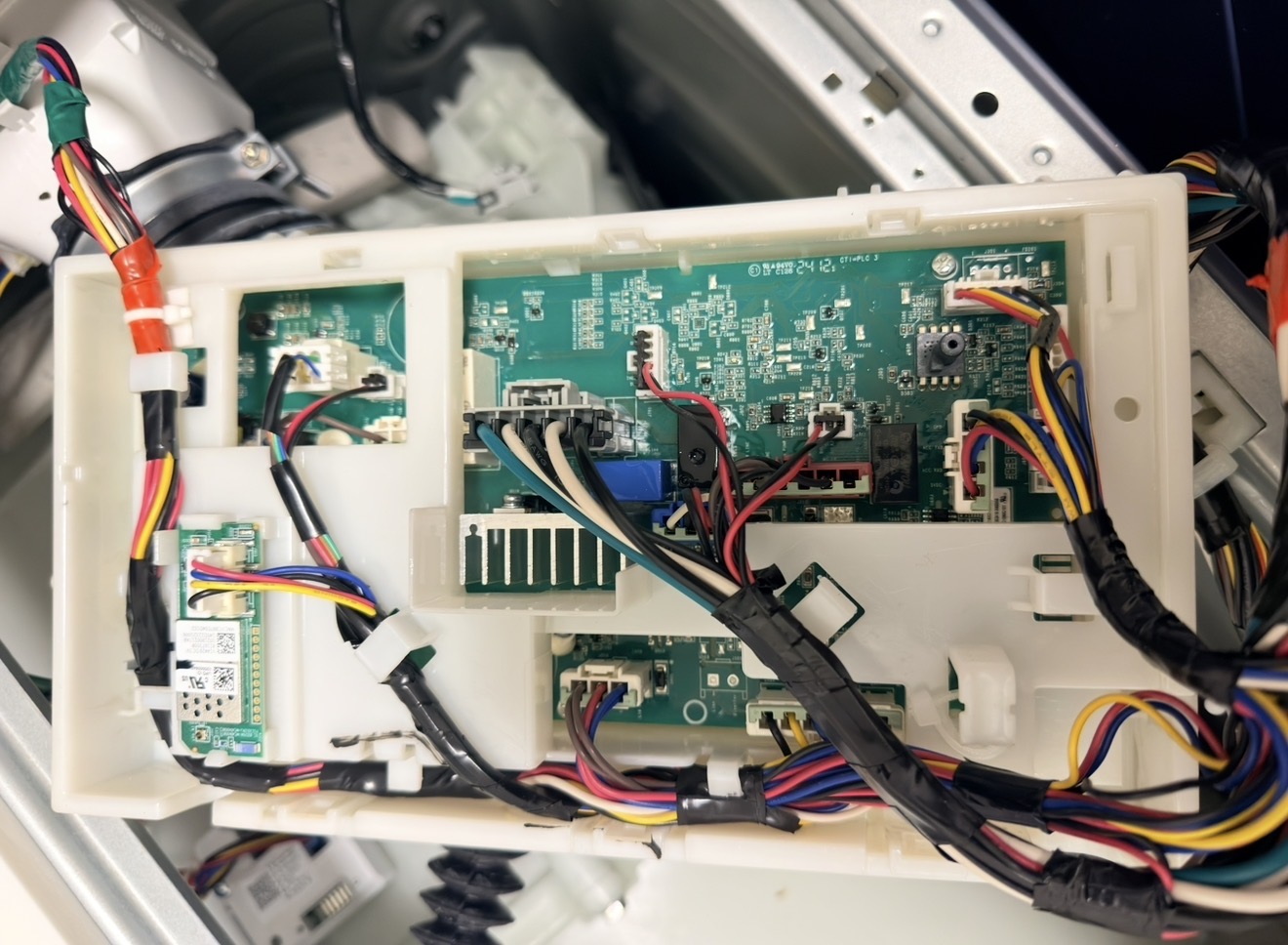
The distinction between F2E1 and F6E3 matters in terms of which board needs replacement — F2E1 often points to the user interface board rather than the main PCB, and replacing the wrong component wastes both time and money. Badma connects a diagnostic reader before touching any board, confirms which component is generating the fault, and replaces only what's confirmed. On WiFi Connect and SmartHQ-enabled models, a firmware communication loop can sometimes mimic a board fault — that's ruled out during the same diagnostic session. GE Profile control board faults are a repair Badma addresses regularly across multiple Staten Island ZIPs. Call with your model number before booking.
This is the most misunderstood GE washer fault type on Staten Island. The GTW685BSLWS, GTW720BSNWS, and similar top-load models — dominant across the South Shore in homes built before 2010 — can stop draining, fail to spin, or halt mid-cycle without displaying any error code on the panel. The control board detects the fault and stops the cycle. The display does not always reflect it. Homeowners assume the machine "just died" and either live with it or replace it unnecessarily.
The diagnostic path on a no-code top-load call is: drain path first (pump and impeller), then lid lock switch, then water level pressure switch. On the GTW series, the lid lock switch is actuated by a small plastic arm that can fail mechanically — partially enough to prevent spin without triggering the full F5E1 or F5E2 code that a complete failure would generate. This partial failure is one of the most common findings on no-code top-load calls across Staten Island. Whether your GE washer shows an error code or just stopped working, Badma diagnoses on-site.
GE front-load models Badma services across Staten Island:
GE top-load models:
What We Repair
Why Choose Premier
| Factor | 🏢 GE Service Center | 🔧 Premier Appliance |
|---|---|---|
| Arrival on Staten Island | ❌ 5–14 day wait | ✅ Same-day |
| All 10 Staten Island ZIPs | ❌ Coverage varies | ✓ All ZIPs |
| No-code top-load diagnosis | ❌ Requires error code | ✅ Any symptom, on-site |
| Board diagnosis before replacing | ❌ Often replace first | ✅ Diagnose which board |
| Service call cost | ❌ $100–150+ | ✅ $80, applied |
| Warranty | ❌ Varies | ✅ 90-day guarantee |
| Weekend availability | ❌ Weekdays only | ✅ Mon–Sun |
Real Repairs, All of Staten Island
GE Profile control board — F2E1 and F6E3 diagnosis
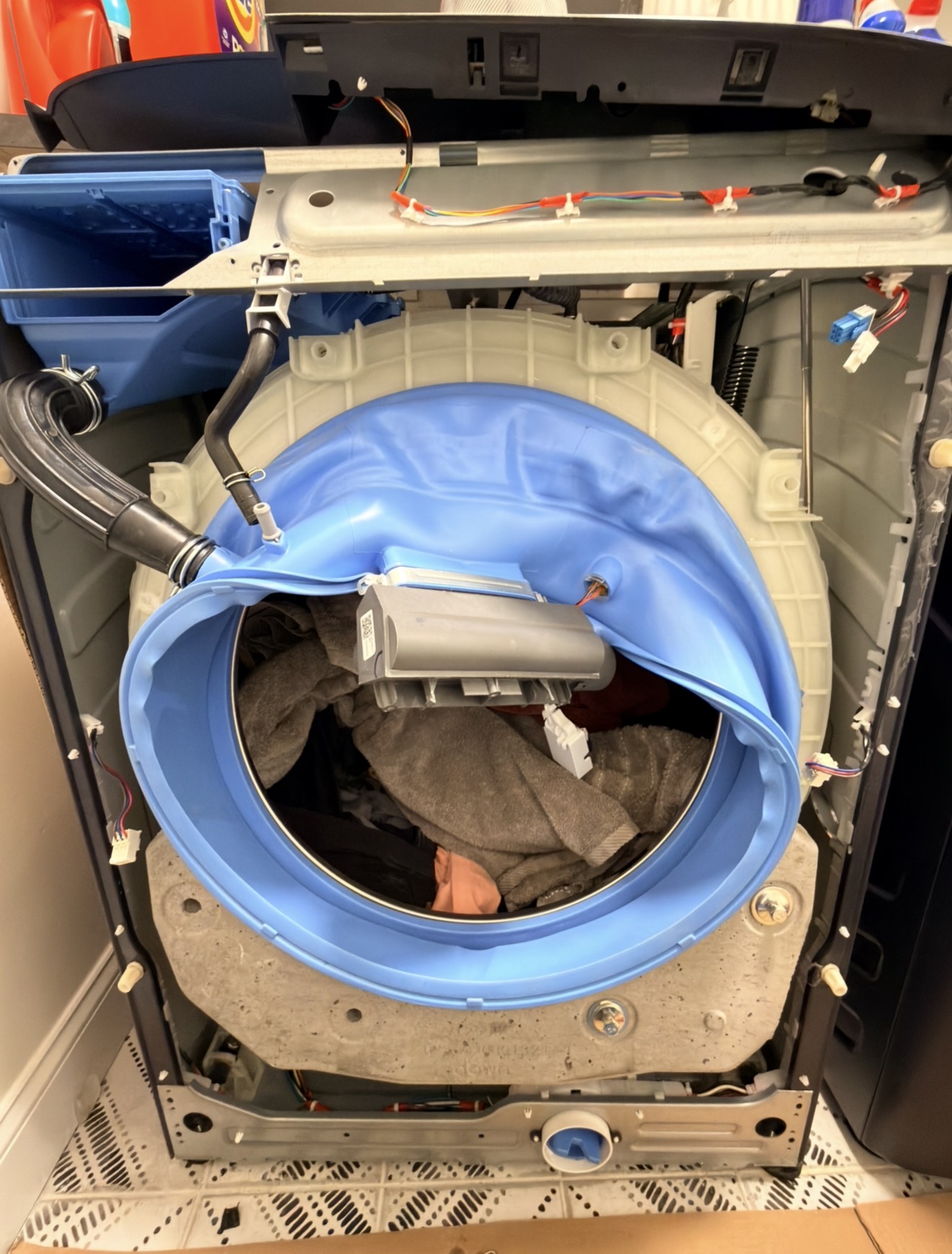
GE front-loader opened — drain and gasket access
Transparent Pricing
Prices subject to NY state sales tax (8.875%).
Book Your Visit
Same-day diagnosis across all Staten Island ZIPs. $80 service call applied toward repair. Call with your model number and Badma will discuss the fault before the visit.
📅 Book Online Now 📞 (929) 261-4444GE Washer Error Codes
Ld or F9E1 is the most common GE washer error across Staten Island. It means the drum didn't drain within GE's timing threshold. On front-loaders, Badma starts with the debris filter — a clogged filter restricts pump intake enough to cause Ld without any pump failure. Filter cleared, machine retested. If Ld returns, the pump is tested under load and replaced as needed. On top-loaders, the same fault often arrives without any code — the machine simply stops draining. Badma diagnoses the drain system on-site regardless of whether a code is showing.
nF or F8E1 means the machine failed to fill within its expected window. First check: the inlet screens at the water supply connection — mineral deposits build up on these mesh filters and restrict flow enough to trigger nF even if the solenoid valve is functioning normally. Badma cleans the screens on-site. If flow doesn't restore, the solenoid valve is tested and replaced as needed. On the GFW series, the hot and cold inlet valves are separate assemblies — Badma tests each independently before replacing either.
dL means the door lock assembly failed to confirm a secure latch at the start of the cycle. On GE front-loaders, the door lock is a combined electrical and mechanical assembly — the latch solenoid, the strike plate, and the door position sensor are all part of the same unit. When one fails, the machine won't start. On machines where the gasket has also worn, the door may not pull fully flush even when the lock engages, triggering a dL fault alongside a leak. Badma checks the lock mechanism, door alignment, and gasket seating together on every dL call.
F5E1 and F5E2 indicate a lid lock failure on GE top-loaders. F5E1 typically means the lid lock didn't engage; F5E2 means it engaged but didn't release. On the GTW series, the lid lock switch is actuated by a small plastic arm — this arm can fail mechanically in a partial way that prevents the spin cycle without triggering a full code, which is why many lid lock failures on these machines arrive as no-code stops rather than as F5E1 or F5E2. Badma tests the full lid lock assembly and replaces it when confirmed failed.
E3 or F7E1 indicates a motor or drive system fault. Badma diagnoses on-site — the cause could be the drive motor itself, the motor control board, or a wiring harness connection that's lost continuity. On GE front-loaders, F7E1 during the spin cycle often points to a motor control issue rather than a complete motor failure. A full diagnostic read determines which component is generating the fault before any part is ordered or replaced.
F2E1 means the user interface board isn't communicating correctly with the main control board. On GE Profile front-loaders like the PFW870SPVRS — now in the 3–6 year fault window — F2E1 is one of the most common board-level codes across Staten Island. The UI board and the main PCB are separate components; F2E1 more often indicates the UI board. Badma reads the full fault log, distinguishes between a UI board failure and a main board failure, and replaces only the confirmed component when the part is available for the appointment.
F6E3 indicates a communication failure between the main control board and the motor control or other subsystem. On WiFi Connect and SmartHQ-enabled GE Profile models, F6E3 can sometimes appear as a firmware communication loop rather than a true board failure — this is ruled out first. If confirmed as a hardware fault, Badma traces the wiring harness for continuity issues before attributing the code to the PCB itself. F2E1 and F6E3 on GE Profile machines indicate a board-level fault — diagnosed and addressed in a single visit.
F0E2 means the machine's sensors detected excess suds in the drum. This is not a mechanical fault — it's almost always caused by using regular detergent in a high-efficiency front-loader, or using too much HE detergent in a single load. Run a clean cycle without any detergent, allow the suds to clear, and switch to the correct HE detergent in the recommended quantity. If F0E2 continues after correcting detergent use, the pressure or turbidity sensor may need inspection.
No-code failures are more common on GE top-loaders than on any other major brand's machines — it's a characteristic of older GE top-load architecture that the control board can register a fault and stop the cycle without generating a readable display code. GTW685BSLWS and GTW720BSNWS machines that stop mid-cycle, fail to drain, or refuse to spin without any panel indication account for a significant portion of GE calls across Staten Island. Whether your GE washer shows an error code or just stopped working, Badma diagnoses on-site. The absence of a code makes the in-person assessment more important, not less.
Common Symptoms
On GE front-loaders across Staten Island, standing water in the drum almost always traces to a clogged debris filter or a failed drain pump. On top-loaders, a foreign object lodged in the pump impeller is the most common cause — and it rarely generates a code before the machine stops completely. Badma accesses the drain system on-site, clears any blockage, and tests the pump under load before confirming what repair is needed.
A leak at the front of a GE front-loader almost always comes from a cracked or torn door boot gasket. The failure point is often at the bottom of the seal — the six o'clock position — where load stress and gravity concentrate wear over years of use. A door lock assembly that no longer pulls the door fully flush can compound the leak even when the gasket is intact. Badma inspects the full gasket perimeter, the clamp ring seating, and the door closure on every front-load leak call.
This is the signature no-code failure pattern on GE top-loaders. The machine stops — often with the drum full of water — without generating a panel code. The most common causes are a failed drain pump, a partially failed lid lock switch (which can prevent spin without triggering a full F5E1 code), or a water level pressure switch that has failed. Badma works through each component in sequence on-site.
An unresponsive or erratic panel on a GE Profile front-loader typically indicates a UI board fault (F2E1) or a wiring harness connection that's intermittently losing continuity. On SmartHQ and WiFi Connect models, a corrupted firmware state can occasionally produce erratic panel behavior that looks like a board failure but clears after a proper reset sequence. Badma works through the reset protocol first, then connects a diagnostic reader to determine whether the fault is firmware, UI board, or main PCB before any part is replaced.
Your Technician
The Repair Process
Call (929) 261-4444 or use the Calendly link to schedule. Share your GE model number and the symptom — an error code, a specific behavior, or just "it stopped." That information lets Badma discuss part availability before the visit. Parts for common GE repairs are available for this appointment — the model number tells him what he'll need.
📅 7 Days a WeekBadma reads the fault log, runs diagnostics, and works through the component sequence specific to the reported symptom: filter and pump for Ld, gasket and door lock for leaks, UI board vs main PCB for F2E1, drain path and lid switch for no-code top-load stops. Each step confirms or rules out a cause before the next is checked. The diagnosis is complete before a quote is written.
Once the cause is confirmed, you receive a written quote for the repair. No work begins without your explicit approval. The $80 service call applies in full toward the repair if you proceed. If you decide not to after seeing the quote, you pay only the $80.
Most GE washer repairs across Staten Island are completed within the same appointment when the required part is available. Every completed repair carries a 90-day parts and labor warranty — drain pump, door gasket, door lock, control board, inlet valve, or lid lock.
🛡️ 90-Day WarrantyService Coverage
Same-day GE washer repair across all of Staten Island — from Silver Lake on the North Shore to Tottenville at the southern tip. Each neighborhood has its own fault patterns based on housing age, water conditions, and the GE models most common in that area. Select your neighborhood for a page specific to your ZIP.
What Staten Island Homeowners Say
"Fixed my Maytag washer in Great Kills, Staten Island on the first visit. Quick diagnosis, professional work, and no unnecessary upselling. Very satisfied."
"Quick service, knowledgeable, and honest. Reasonable pricing and would hire again. Highly recommend!"
"Had my LG dryer repaired this same day in Eltingville. Fast, professional service and a great overall experience. Highly recommend!"
"Great experience. Extremely timely, clean and smart. He took apart my dryer, quickly diagnosed the problem and repaired it. The best part was the price."
"Best experience I've had with appliance repair in many, many years! Cannot recommend highly enough."
"Technician came on the day of my request. He did an amazing job. He was very clear on what needs to be done and corrected the problem as promised."
Frequently Asked Questions
The Ld / F9E1 drain error is the most common across all Staten Island ZIPs — usually a clogged debris filter, a failed pump, or both. After that: door gasket leaks, dL door lock faults, and nF inlet valve failures on front-loaders; no-code drain and lid lock failures on GE top-loaders. On GE Profile machines like the PFW870SPVRS, control board faults (F2E1, F6E3) are increasingly common as these machines hit the 3–6 year mark.
Yes. The PFW870SPVRS UltraFresh Vent and GFW850SPNRS are among the machines Badma services most regularly across Staten Island. These models develop control board faults (F2E1 and F6E3), door gasket wear, drain pump failures, and dL door lock errors — all diagnosed on-site. Call (929) 261-4444 with your model number to discuss the fault pattern before booking.
Yes — and this is one of the most common call types across Staten Island. GE top-loaders like the GTW685BSLWS can stop draining, fail to spin, or halt mid-cycle without generating a readable panel code. It's a characteristic of older GE top-load architecture. Badma diagnoses the drain path, lid lock switch, and pressure switch on-site regardless of whether a code is present. The absence of a code doesn't change the diagnostic process.
Ld or F9E1 means the drum didn't drain within GE's expected timing window. On GE front-loaders, Badma always starts with the debris filter — the bottom-front access panel that collects lint and foreign objects. A clogged filter restricts pump intake enough to trigger Ld without any pump failure. If Ld clears after the filter is cleaned and doesn't return during the test cycle, no further repair is needed. If Ld continues, the drain pump is tested under load and replaced as needed.
Yes — all of Staten Island. Silver Lake and Grymes Hill (10301), Todt Hill and Emerson Hill (10304), South Beach and Arrochar (10305), New Dorp and Oakwood (10306), Tottenville (10307), Great Kills (10308), Charleston and Princes Bay (10309), West Brighton (10310), Eltingville and Annadale (10312), and Bull's Head and New Springville (10314). Same-day service, $80 service call, 7 days a week.
On the front-load side: PFW870SPVRS, GFW850SPNRS, GFW650SSVWW, and GFW490RPKDG are the most common. On the top-load side, the GTW685BSLWS is by far the most prevalent across the South Shore — a durable machine that develops drain and lid lock faults at the 8–12 year mark. Call (929) 261-4444 with your model number — Badma can discuss the specific fault pattern for your machine before booking.
Yes — the $80 covers travel, on-site diagnosis, and a written quote. It applies in full toward your repair if you proceed. If you decide not to after seeing the quote, you pay only the $80. No work begins without your explicit approval. No weekend surcharges, no fuel fees, no additional diagnostic fees.
Yes — both types under the same $80 service call. Front-loaders including the PFW870SPVRS, GFW850SPNRS, GFW650SSVWW, GFW490RPKDG, and GFW148SSMWW. Top-loaders including the GTW685BSLWS, GTW720BSNWS, GTW840CPNDG, GTW860SPJMC, and GNW128PSMWW. Both front-load and top-load, both coded and no-code faults, all Staten Island ZIPs.
Ready to Fix It
Every Staten Island ZIP covered. $80 service call applied toward your repair. 90-day parts and labor warranty on every completed job. Call with your model number and Badma will discuss the fault before the visit.