90dWarranty on every completed repair — parts & labor
10 ZIPsFull Staten Island coverage — North Shore to South Shore
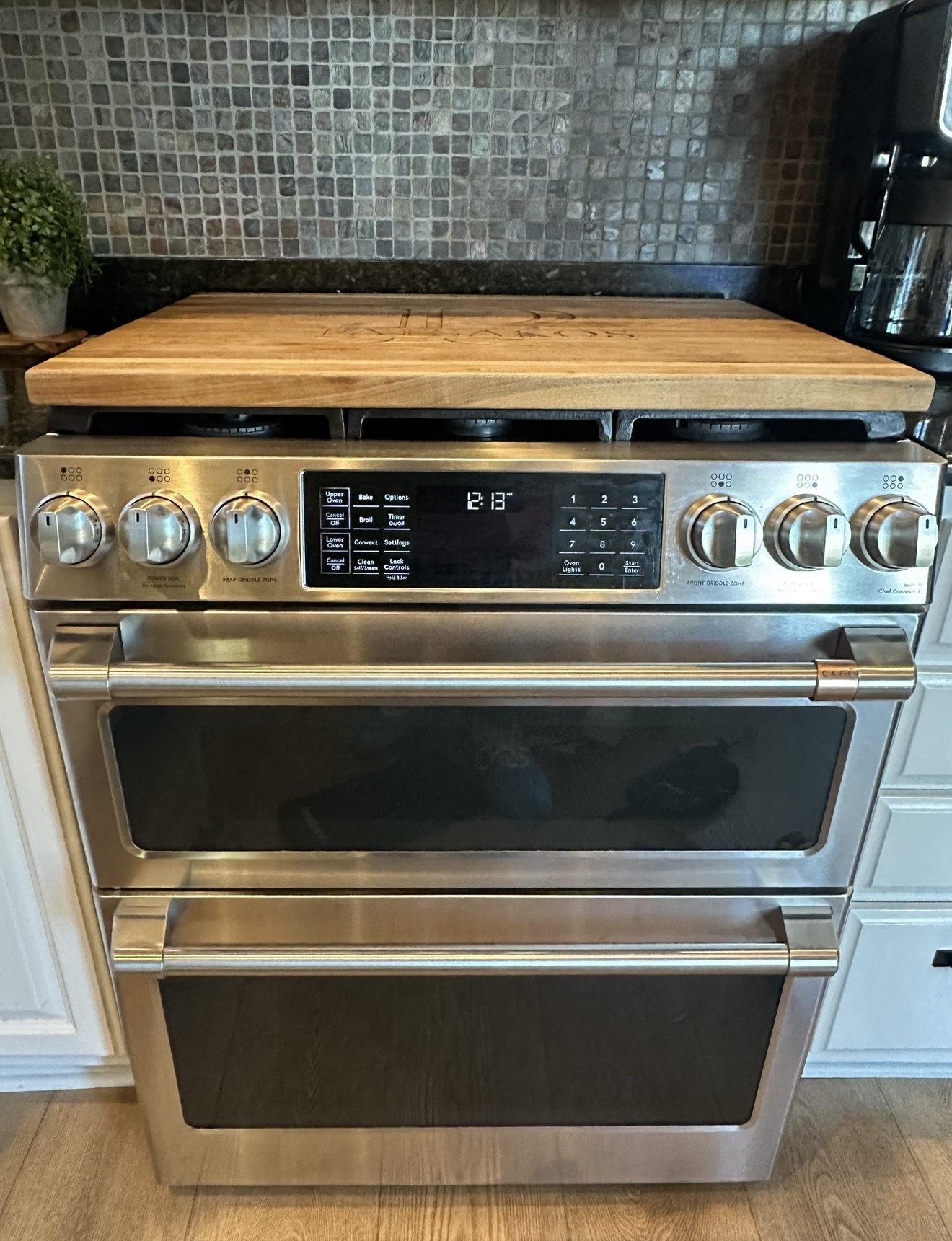
GE Oven Repair — Staten Island
GE Oven Repair on Staten Island — From Bake Igniter to Self-Clean Damage to Profile Touchpads
All Staten Island · 10301–10314
"My GE oven won't heat." "Bake igniter glows but no flame." "Stuck after self-clean." "Profile touchpad isn't responding." These are the calls we hear most across Staten Island. GE's install base on the island is enormous — Adora, base GE, Profile, Cafe, and Monogram, in every neighborhood from pre-war North Shore homes to 2000s subdivisions in New Springville. Different tiers fail in different ways, and the self-clean cycle is unusually destructive across all of them. Many problems have simple fixes you can try yourself in five minutes. If the resets don't solve it, Premier Appliance Repair Staten Island charges a flat $80 diagnostic for any Staten Island ZIP — no zone surcharge. Badma diagnoses on-site and gives you the exact repair price in writing. Approve and the $80 applies to the repair; decline and you pay only the $80.
Safety first — gas smell is not a DIY situation. If you smell gas (not just a brief whiff when a burner first lights), turn off the range, open windows, do not flip any light switches, and call National Grid at 1-718-643-4050. They respond 24/7 free of charge and will shut off the supply if there's a leak. Only after the gas is safe, call us for the range repair.
GE Oven Won't Heat — Try These Three Resets First (No Tools Needed)
Before assuming a part has failed, rule out three common false alarms:
1. Control panel is in LOC (Lock) mode. Display shows "LOC" or a padlock icon — the lockout is engaged. The oven accepts no commands. To unlock on most GE models, hold the 9 button (or "Lock Controls") for 3 seconds. On Profile and Cafe glass touch panels, hold the lock icon for 3 seconds. Solves a meaningful share of "won't turn on" calls.
2. "PF" code from a recent power blip. GE's power-failure-recovery code. Even a momentary Con Edison flicker — common during summer storms across Staten Island — leaves PF showing. Press Clear/Off, re-enter the time of day. If PF keeps reappearing, the control board has a backup-battery or capacitor issue.
3. Breaker tripped. Even gas ovens need 120V for controls and igniter. Check the breaker labeled "Range" or "Oven" — flip OFF for 30 seconds, then ON. Half-tripped breakers (between OFF and ON) cause confusing partial-power weirdness — wiggle the handle to confirm.
Bake Igniter — The #1 GE Gas Oven Failure
If the resets don't solve it, the most common GE gas oven problem is a weakening bake igniter. GE gas ovens use a hot surface igniter — a ceramic-and-silicon-carbide bar at the bottom of the cavity that glows orange when the oven calls for heat. Over 4 to 8 years of daily use the igniter degrades; it still glows, but it can no longer trigger the gas safety valve. Result: orange glow, no flame, no heat.
Set Bake 350°F and watch through the window with the oven light on. Within 30 to 45 seconds you should see a bright orange glow at the bottom of the oven, followed by a blue flame. Glow but no flame after 60+ seconds = weak igniter. Glow takes 90+ seconds = also weak igniter, replace before complete failure. No glow at all = the igniter has gone cold or there's a wiring issue. Most common GE bake igniter: WB13K10043 (flat-style, replaces the older round WB2X9154); newer Profile and Cafe gas models use WB13X25500. Standard same-visit repair — Badma carries all three on the truck. If the glow test points to a weak igniter, call us and we'll have it fixed the same day.
GE Oven Won't Bake but Broil Works — Bake Element or Bake Relay
This complaint points away from the igniter on gas ovens (the igniter serves both bake and broil), but on GE electric ovens it's diagnostic. Broil heats fine but bake doesn't = bake element failure. On the JB-series — JB645, JB655, JB735 — the part is typically WB44T10010. Look through the door at the lower element while it's calling for heat. A working element glows uniform red-orange across its full length within 60 seconds. A failed element shows a blackened spot, a visible blister, or a clean break. If both elements are dead but the controls work, the issue is on the control board side — that's a diagnostic call.
GE Oven Won't Turn On at All — Display Dark or PF Loop
Different from "won't heat" — here the display is dark or buttons don't respond. Cycle the breaker OFF for 30 seconds and back ON. Check for PF on the display and press Clear/Off to clear. Pull the range out and verify the plug is fully seated. If the display still won't power up after a 5-minute breaker cycle, the issue is on the control side — usually the glass touch control board (WB27T11476 or WB27X28906 on Profile and Cafe) — and needs a diagnostic visit.
Distinctive GE Pattern
Why GE Self-Clean Cycles Damage Ovens
If there's one thing that sets GE oven repair apart, it's the post-self-clean call. GE pyrolytic self-clean cycles run hotter and longer than most competitors — peak cavity temperatures of 850 to 900°F sustained for 3+ hours, with the door locked the entire time. We see four distinct post-self-clean failure patterns repeatedly across Staten Island, especially on ovens 5+ years old. Practical advice: on any GE oven older than 5 years, skip self-clean and clean manually with a damp cloth and baking soda paste.
Self-Clean Killed My GE Bake Element (WB44T10010)
The most common post-self-clean failure on GE electric ovens. The bake element runs hot during normal baking — about 550°F surface temperature — but during self-clean it's pushed past 900°F to maintain pyrolysis temperature. Any pre-existing weakness — a corroded section, a thinning spot, a hairline crack — gets finished off. You finish the cycle, and the next time you preheat for dinner the element either won't glow at all, or glows partway and then a section flares white-hot before going dark (the visible failure point). Replace WB44T10010 on most JB-series, WB44T10011 on some larger-cavity models. The element is mounted with two screws at the back of the cavity and disconnects with a quick-connect plug. Same-visit repair.
F9 Door Lock Stuck After Self-Clean (WB14T10026)
The #2 post-self-clean call. The door lock motor (WB14T10026) is a small electric motor with a plastic gear train that drives the lock latch. During self-clean it sits in a 900°F cavity environment for hours — the motor itself usually survives, but the plastic gear train softens and strips. The cycle ends, the cavity cools, the controller commands the lock to retract — and the gears slip without moving the latch. Do not force the door open — you'll bend the lock arm and damage the hinges, turning a $200 lock-motor repair into a $500+ door rebuild. Wait at least 2 hours after the cycle ends, then power-cycle at the breaker for 10 minutes. If F9 persists, call us. Badma releases the door safely on-site without damage and replaces the motor in a single visit.
Control Board Failure After Self-Clean (WB27T11476 / WB27X28906)
The most expensive post-self-clean failure on GE Profile and Cafe ovens. The glass touch control board sits behind the front panel, just above the cavity. During self-clean, heat radiates up through the cavity wall and warms the board for hours — and the electronics on modern Profile and Cafe boards don't tolerate that sustained warming. First symptom after the cycle: the touchpad becomes intermittent, the display shows random characters, or you get an F97/F98 error. Replacement: WB27T11476 on older Profile builds, WB27X28906 on newer. Typically special-order (1 to 3 business days). Diagnostic confirms it's the board versus a cheaper sensor issue before you commit.
Door Gasket Compressed After Self-Clean (WB36X5615 / WB35X20830)
The least dramatic but most common post-self-clean issue. The fiberglass-cloth gasket around the oven door is rated for repeated 900°F exposure, but each self-clean cycle compresses it slightly. After 5 to 8 self-clean cycles, the gasket is permanently flattened and no longer makes a tight seal. Symptom: oven takes 20+ minutes to preheat where it used to take 10, or food cooks unevenly because heat is leaking. Test: close the door on a dollar bill and try to pull it out. Easy slide-out = gasket gone. Replacement is WB36X5615 or WB35X20830 depending on model. Inexpensive part, ~30-minute install, dramatic improvement in oven performance.
GE Profile Touchpad Not Responding — F176 / Touchpad Disconnect
Separate from the post-self-clean control-board failure: on newer GE Profile and Cafe ovens with full glass touch panels, the touchpad can become intermittent without any single triggering event. Sometimes you get an F176 code (touchpad disconnect on the newest generation), sometimes it just goes silent. Cause: the membrane behind the glass that translates touches into electrical signals degrades over years from heat and grease. Cleaning won't fix it; the assembly needs replacement. Common parts: WB27T11476 (older Profile), WB27X28906 (newer). Bring the model number on the diagnostic visit.
GE Oven Takes Too Long to Preheat / Not Reaching Temperature
Three causes: (1) Weak bake igniter — even when it eventually lights, a weak igniter cycles the gas valve open later and shorter than it should. (2) Compressed door gasket (covered in self-clean section above — the most common cause on older ovens). (3) Sensor drift. Use a $6 oven thermometer to verify actual versus displayed after a full preheat. A 35°F+ gap means the sensor (WB21X5301 on most JGB/PGB models, WB21X22134 on newer Profile/Cafe) is drifting and needs replacement.
Surface Burner Clicks but Won't Light — Often a 10-Minute DIY Fix
Different from oven issues — this is the cooktop. Almost always a cleaning fix. Let the burner cool, lift off the grate, burner cap, and burner head. Clean the small holes with a pin or toothpick — trapped food and grease block gas flow. Wash with warm soapy water, rinse, and dry completely. Reassemble with the cap flat and centered. If it still clicks without lighting, the spark electrode is cracked or the spark module has weakened. GE-specific quirk: on PGB and CGS Profile/Cafe gas slide-ins, when one burner clicks all burners click — that's normal (the spark module fires all electrodes whenever any knob is in LITE position). If only one burner won't light, the issue is at that electrode, not the module.
GE Wall Ovens — JTS3000, PT9551, JT3500
Wall ovens are mounted into cabinetry and demand a different repair workflow than freestanding ranges. Common GE wall oven models on Staten Island: single-cavity JTS3000 and JT3500, double-cavity PT9551 Profile. The diagnostic is the same flat $80, but expect the visit to run a bit longer — wall ovens are held by 6 to 8 trim screws and have to be partially slid out to access the rear panel. Common wall-oven failures: bake element burnout (WB44T10010 family), convection fan motor seizure (WB26K5025 or WB26X10213), and door hinge springs losing tension. Badma handles wall-oven removal and reinstallation as part of the repair, no carpenter needed.
GE Profile Advantium PSB9120 — Speed Oven / Microwave Hybrid
The Advantium is a unique product — a wall oven that combines microwave, halogen-light cooking, and convection bake in one cavity. The PSB9120 is the most common Profile Advantium on Staten Island, often installed above a separate JT-series wall oven. Failures cluster in three areas: (1) Halogen lamps burn out after 1,500 to 2,500 cooking hours and must be replaced as a set for even cooking. (2) Magnetron fails like any microwave, with reduced heating power as the warning sign. (3) Door interlock switches — Advantium has a more complex switch stack than a standard oven, and a single failed micro-switch shuts down the whole unit. Parts are special-order on most Advantium repairs (1 to 3 business days). For any Advantium model other than PSB9120, call with the model number and we'll confirm parts availability.
GE Induction PHB920 — When the Cooktop Stops Recognizing Pots
Induction ranges are different beasts from gas or radiant electric. The PHB920 is GE's most-installed induction slide-in on Staten Island. Common complaint: a burner that suddenly stops "recognizing" cookware (you place a pot down, the display shows a "U" or no number, no heat). Two causes: cookware isn't induction-compatible (must be magnetic — quick test: a fridge magnet should stick firmly to the pot bottom), or the induction coil under that burner has failed. On the PHB920 each burner has its own coil and inverter board — single-burner failures are isolated repairs, not full-cooktop replacements. Other induction-specific failures: cooling fan seizure, and burner-specific F-codes from a failed inverter board (the exact code varies by build year — bring your model number for the diagnostic).
GE Tier System: Adora vs Profile vs Cafe vs Monogram — Why It Matters for Repair
GE Adora (entry, often badged simply "GE") uses simpler controls and standard heating components — straightforward igniter, sensor, and element replacements. Base GE (JGB and JB series) sits just above Adora with similar parts. GE Profile introduces glass touch panels, more electronics, and convection — failures shift toward control boards and touchpads. GE Cafe shares internals with Profile but adds finish-specific parts (door handles and gaskets aren't interchangeable with base models).
GE Monogram is the luxury built-in line. Monogram uses a separate parts catalog (ZE, ZET, ZSC prefixes), parts run 2 to 3 times the cost of equivalent Profile components, and lead times can stretch to a week. Common Monogram models on Staten Island: ZET1 single wall oven (door hinge springs and convection fan motors are the failures we see most), ZET9550 / ZET2 double wall ovens (upper-cavity bake element fails first because it sees more cycles), and ZSC2200 Advantium-tier built-in (halogen tubes and door-interlock switches recur, same pattern as Profile PSB9120 but with Monogram pricing). Build quality is genuinely higher; properly maintained, a Monogram outlasts two or three Profile ovens of the same vintage. Share the model number when you call — it tells Badma which tier you have and which parts to load.
Why We Don't Quote Prices Over the Phone
Two GE gas ovens with "won't heat" can need different parts. The only way to know is to test on-site. $80 for the diagnosis, exact repair price in writing, $80 credited if you approve, $80 only if you decline. Same deal, every Staten Island ZIP.
Why Choose Premier
Premier vs GE Service Center
Factor
GE Factory Service
Premier Appliance
Arrival on Staten Island
5–14 day wait
Same-day
Free phone advice before a visit
Queue & script
Always
Diagnostic fee
$109+
$80, applied
Price quoted before work starts
Not always
Always in writing
Warranty
Varies
90-day guarantee
Weekend availability
Weekdays only
Mon–Sun
Honest, Transparent Pricing
What a Visit Costs
Diagnostic
$80
On-Site Diagnosis
Flat fee, anywhere in Staten Island. Covers travel, complete diagnosis of your GE gas, electric, or wall oven, and a written repair quote. Applied toward the repair if you proceed.
$0
Hidden Fees
No weekend charge. No trip fee. No fuel surcharge. No North Shore vs South Shore zone pricing. Price quoted before work starts and locked in.
How the repair price is determined: After diagnosis, Badma gives you the exact price in writing. It depends on which part failed and your GE model tier — a bake igniter (WB13K10043), spark electrode, temperature sensor (WB21X5301), bake element (WB44T10010), door lock motor (WB14T10026), and Profile/Cafe control board are all different repairs at different prices. You approve the price before any work starts. Every completed repair carries a 90-day parts and labor warranty.
Prices subject to NY state sales tax (8.875%).
GE Oven Error Codes
What Your Display Is Telling You — Quick Reference
Most GE F-codes share the same first response: power-cycle at the breaker for 5 to 10 minutes. If the code returns immediately, you need service. The table below covers what each code means and what to try first; the deeper diagnostic walkthroughs are in the Problems section below.
Code
What It Means
First Action
F2
Over-temperature — runaway protection tripped
Cut power at the breaker for 10 minutes. F2 returns immediately on Bake = sensor or control board issue. F2 only after several minutes = sensor drifting. Sensor WB21X5301 / WB21X22134.
Hold the 9 button for 3 seconds. Profile/Cafe: hold the lock icon for 3 seconds. Costs nothing if it solves it.
PF
Power failure recovery — Con Edison flicker, tripped breaker, or unplug
Press Clear/Off, re-enter time of day. One-time PF after a known outage = ignore. Recurring = control board capacitor failing.
— (no code)
Single burner clicks but won't light
Cool, lift grate / cap / head. Pin-clean the holes. Wash, rinse, dry completely. Reassemble flat. Still no light = electrode or spark module.
F-codes vary across the GE lineup; Profile and Cafe glass touch panels sometimes report different error codes than base GE. Bring your model number when calling and we'll match the exact diagnostic path. Call (929) 261-4444 →
Common GE Oven Problems
Quick Symptom-First Troubleshooting
GE oven won't heat — burners work, oven stays cold▼
Most common GE gas oven complaint. In 8 of 10 cases on ovens 4+ years old, it's a weakening bake igniter.
Set oven to Bake 350°F, watch through the window with the oven light on.
Glow within 30-45 seconds + blue flame = working. Glow but no flame after 60+ seconds = weak igniter.
No glow ever = dead igniter, broken wire, or relay fault.
BadmaOwner & Technician · Premier Appliance Repair Staten Island LLC
4+ Years Repairing GE Gas & Electric Ovens Across Staten IslandGas ranges, electric ranges, slide-ins, wall ovens — Adora, base GE, Profile, Cafe, Monogram
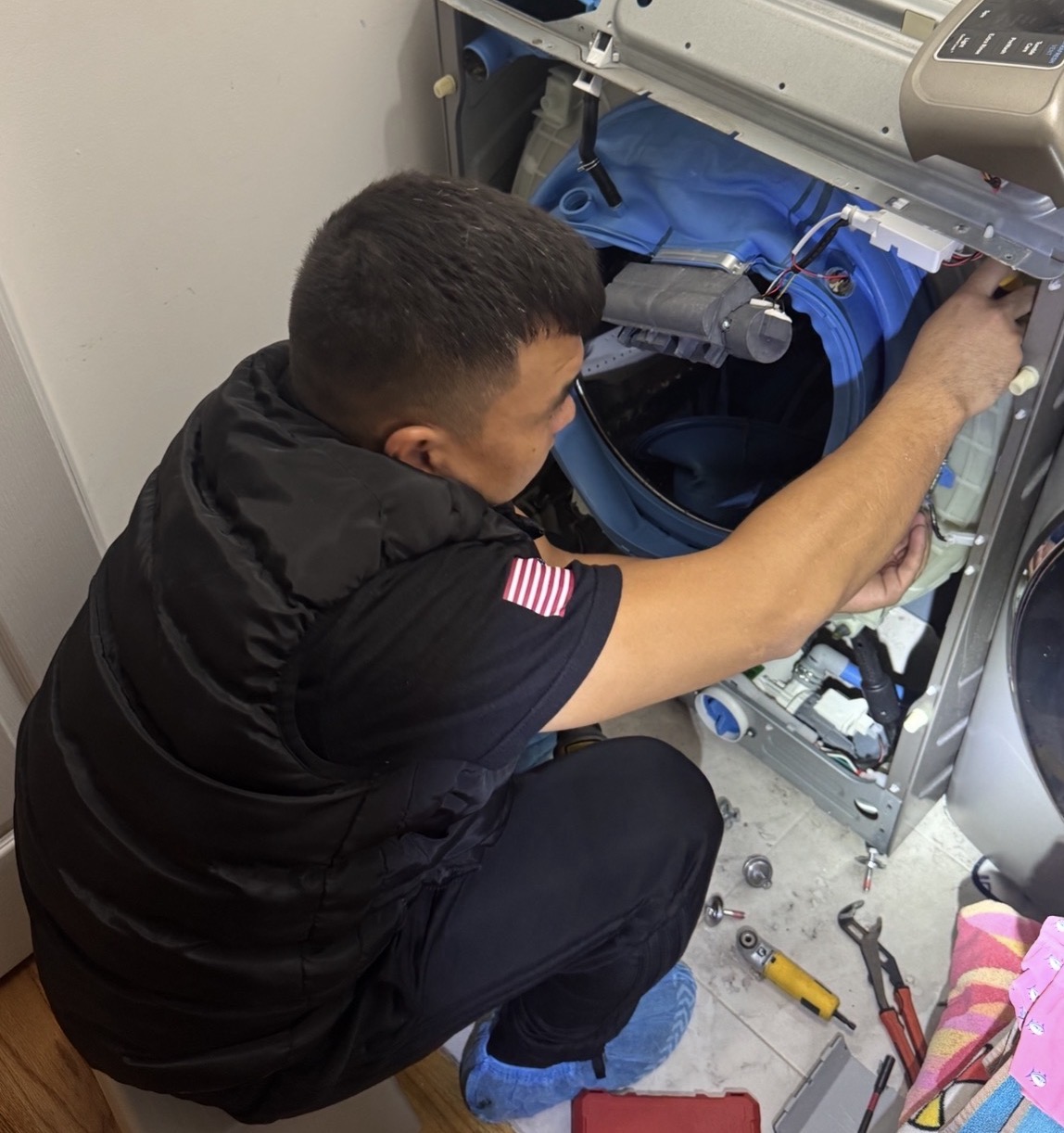
Every Repair, PersonallyBadma handles the diagnosis, sources the parts, and does the repair himself — no subcontractors
$80 Flat Diagnostic — Exact Price AfterNo phone guesses, no surprise fees. Written quote before any work starts.
90-Day Parts & Labor WarrantyOn every completed repair — backed by Badma directly
The Repair Process
How a GE Oven Repair Visit Works
1
Call or Book — Share Your Model and Symptom
Call (929) 261-4444 or book online. Share your GE range model number (on the label inside the door frame or near the storage drawer) and what's happening — the error code, whether the burner clicks, whether you saw the igniter glow orange. Badma often has specific troubleshooting to try on the phone before scheduling, and some issues — stuck LOC mode, a PF code after a brownout — get solved in 5 minutes at no cost.
7 Days a Week
2
On-Site Diagnosis — $80 Flat
Badma arrives, inspects the range, and tests the relevant components — bake igniter, spark module, spark electrode, temperature sensor, door lock motor, control board, wiring — to identify exactly what has failed. The $80 covers the visit and the diagnosis regardless of how long it takes.
3
Written Quote — Exact Price Before Any Work
You get the exact repair price in writing — the specific part, its cost, and the labor. If you approve, the $80 diagnostic applies toward the total. If you decide not to proceed, you pay only the $80 and Badma leaves. No pressure, no upsell.
4
Repair Done — Same Visit When Part Is On Truck
Most common GE parts — bake igniters (WB13K10043, WB13X25500), spark electrodes, temperature sensors (WB21X5301), door lock motors (WB14T10026), bake/broil elements (WB44T10010, WB44T10011) — are on Badma's truck. Profile and Cafe glass touch control boards (WB27T11476, WB27X28906) are typically special-order, 1–3 business days. Every completed repair carries a 90-day parts and labor warranty.
90-Day Warranty
Service Coverage
GE Repair in Every Staten Island ZIP
Same diagnostic price, same warranty, same Badma — across the whole borough. Tap any ZIP for neighborhood-specific information.
Yes. Every completed repair has a $180 minimum labor charge, and your $80 diagnostic is applied toward it. We're a licensed, insured shop and back every repair with a 90-day parts-and-labor warranty - so even a quick fix gets the same workmanship and guarantee, not a temporary patch. If parts are needed, they're quoted on-site before any work, and nothing starts without your approval.
Why won't my GE oven heat?+
On GE gas ovens (the JGB, PGB, PGS, and CGS series), 8 of 10 "oven won't heat" calls trace to a weakening bake igniter. The igniter still glows orange but the burner never lights. Try this: set Bake 350°F and watch through the oven window with the oven light on. Within 30 to 45 seconds you should see a bright orange glow at the bottom, followed by a blue flame. Glow but no flame after 60+ seconds = weak igniter. The most common GE bake igniter is WB13K10043 (the flat-style replacement that replaces the older round WB2X9154). Newer Profile and Cafe models use WB13X25500. On GE electric ovens (the JB, PHB, JTS series), the same complaint usually means a failed bake element (WB44T10010 on most JB-series) — look through the door for a visible burn spot, blister, or break in the lower element. Quick checks before calling: make sure the control panel isn't in LOC (locked) mode, the door is fully closed, no PF code is showing from a recent power blip, and the breaker isn't half-tripped. If those don't help, call us. Same-day diagnosis across Staten Island.
Why won't my GE oven turn on at all?+
Different from "won't heat" — here the controls are dead too. Even gas ovens need 120V electricity for the controls. Three steps: 1) Check the breaker labeled "Range" or "Oven" — flip OFF for 30 seconds, then ON. Sometimes breakers trip half-off and give confusing symptoms. 2) Look for "PF" on the display — that's GE's power-failure-recovery code. Press Clear/Off and re-enter the time of day; the oven should reset. 3) Pull the range out and verify the plug is fully seated in the wall outlet — over years of vibration, plugs creep loose. If the display still won't power up after a 5-minute breaker cycle, the issue is on the control side — usually the glass touch control board (WB27T11476 or WB27X28906 on Profile and Cafe) — and needs a diagnostic visit. Same-day repair available across all 10 Staten Island ZIPs.
What does the F2 or F3 code mean on my GE oven?+
On GE ovens these are the two most-seen sensor and over-temp codes. F2 means the oven exceeded its safe high-temperature limit — the control's runaway protection has tripped. Stop using the oven, turn off the breaker for 10 minutes, and let it cool fully. If F2 returns when you bake again, the temperature sensor (WB21X5301 on most JGB/PGB models, WB21X22134 on newer Profile/Cafe builds) is reading low, the control board is mis-firing the bake relay, or the bake element is shorted. F3 (sometimes shown as F3 E0/E1/E2) means the oven temperature sensor circuit is open or shorted — sensor failed, harness pinched, or the connector at the back of the oven cavity is loose. Both are same-visit repairs once Badma has the model number — sensors are stocked on the truck.
The igniter glows but the burner won't light. What's wrong?+
The single most common GE gas oven failure on units 4+ years old. The igniter still glows orange but has weakened with age — the burner doesn't light even though the glow is visible. Replacing the igniter solves the problem in most cases (replacing the gas valve almost never does). The repair takes disassembly to reach the igniter — we do it as a same-visit replacement. Badma carries the WB13K10043 and the round WB2X9154 on the truck. If the resets and the glow test point to a weak igniter, call (929) 261-4444 and we'll have you cooking again the same day.
Why does my GE oven take so long to preheat?+
Three common causes on GE ranges. 1) Weak bake igniter — even when it eventually lights the burner, a weak igniter cycles the gas valve open inefficiently, slowing preheat from a normal 8 to 12 minutes out to 20 to 30 minutes. 2) Worn door gasket (WB36X5615 or WB35X20830 depending on model) — heat is escaping. Run a dollar-bill test: close the door on a strip of paper, try to pull it out. If it slides out easily, the gasket is compressed and needs replacement. 3) Drifting temperature sensor — the control reads a falsely high temperature and shuts off heat early. Buy a $6 oven thermometer and verify actual temperature versus what the display shows after a full preheat. Off by more than 35°F = sensor needs replacement. Badma tests sensor, igniter, and gasket on the diagnostic visit.
How much does GE oven repair cost in Staten Island?+
The diagnostic is $80 flat — same price for every Staten Island ZIP, North Shore to South Shore. After diagnosis, the repair price depends on which part failed and your GE model tier (Adora, base GE, Profile, Cafe, or Monogram). We don't quote over the phone because two ovens with the same "won't heat" symptom can need different parts — a bake igniter, a temperature sensor, a bake element, or a glass touch control board are all different repairs at different price points. Common repairs (bake igniters, temperature sensors, door lock motors, gaskets) are mid-range; Profile and Cafe glass touch boards are higher. You get the exact price in writing before any work starts. If you approve, the $80 applies toward the total. If not, you pay only the $80 and Badma leaves.
I smell gas near my GE range — what should I do first?+
Do NOT try to fix this yourself. Turn off the range. Open windows. Don't flip any light switches or use lighters. Call National Grid's 24-hour gas emergency line at 1-718-643-4050 — they come out free and will shut off supply if there's a leak. Only after National Grid clears it and the area is safe, call us at (929) 261-4444 to repair the GE range part that caused the issue. We don't service live gas leaks — that's utility-company work. Once the gas situation is safe, we replace the failed gas safety valve, regulator, igniter, or burner manifold that allowed the leak.
Do you cover all Staten Island ZIPs same-day?+
Yes — all 10 Staten Island ZIPs same-day. North Shore: 10301, 10304, 10310. Mid-Island: 10306, 10314. South Shore: 10305, 10307, 10308, 10309, 10312. Same diagnostic price, same warranty, same hours: Mon–Fri 8 AM – 10 PM · Sat–Sun 9 AM – 5 PM. Same-day slots usually available if you call before 3pm. No weekend surcharge — $80 diagnostic is the same whether you book Tuesday morning or Sunday afternoon.
What GE models do you repair?+
All GE gas ranges, electric ranges, induction ranges, and wall ovens — across the Adora, base GE, Profile, Cafe, and Monogram tiers. Common gas models: PGB960, PGS960, JGB660, JGB735, JGB860, PGB935, CGS750, JGBS66, JGAS640. Electric: JB645, JB655, JB735, JB750, JBS60, PHB920 (induction). Wall ovens: JTS3000, PT9551, JT3500, PSB9120 (Profile Advantium), CT9550 (Cafe). Slide-in and built-in models welcome. If you have a different GE model, call with the model number — we work on every GE range and oven. Find the model number on a label inside the oven door frame, on the side of the storage drawer, or behind the warming drawer panel.
How long is the warranty?+
Every completed repair carries a 90-day parts and labor warranty. If the same issue returns within 90 days, Badma comes back and fixes it at no additional charge. The warranty is backed directly by Premier Appliance Repair Staten Island — no paperwork to file with a third party. The $80 diagnostic itself is not warranted (it covers the on-site visit), but every repair we perform is.
Ready to Fix It
GE Oven Not Heating, Won't Turn On, or Bake Igniter Glowing Without Flame? Try the DIY Steps First — Then Call Us
Same-day service across all 10 Staten Island ZIPs. $80 diagnostic, exact repair price after we see the problem, 90-day warranty on every completed repair.